Mistakes When Selling a Home: 7 Errors That Cost You Time and Money

Discover the main mistakes when selling a home and how to avoid errors that cost you time, viewings and money.
Selling in Vilanova i la Geltrú or the Garraf? This is how we do it, area by area. And if you'd like a figure first, ask for a free valuation.
Selling a home seems simple: take a few photos, upload a listing to a portal and wait for the calls. However, the reality is usually quite different.
Many owners spend months trying to sell without understanding what is going wrong. Quite often it is not the market, the location or even the timing. The problem is usually a series of small mistakes that add up, reduce viewings, cool buyers' interest and end up hurting the final price.
Knowing the main mistakes when selling a home can help you avoid wasted time, frustration and unnecessary negotiations.
Key points
A price that is too high holds the sale back. Buyers compare a great deal before asking for a viewing and, if a flat looks more expensive than similar options, they normally stop considering it.
The first decision is made looking at the photos. Before visiting a home, buyers have already formed an impression from the images. Dark, crooked or rushed photos tend to reduce interest a lot.
Publishing is not the same as selling. A listing needs a strategy: the order of the images, the text, the cover image and the price can give two similar flats completely different results.
Hiding defects usually backfires. If buyers discover something relevant during the viewing that they were not expecting, they lose trust. Explaining a limitation properly creates more credibility than hiding it.
A strategy needs time. Changing the price, the photos or the text every so often gives a sense of improvisation. The market needs time to respond.
Reacting late also has a cost. With few viewings and a long time on the market, the property starts to “burn out”: buyers have already seen it and interpret it as a home that is hard to sell.
1. Setting a price that is too high from the start
This is probably the most common mistake.
Many owners think:
“There will always be room to negotiate.”
But the current market works differently.
Today buyers compare a great deal before asking for a viewing. If a flat looks clearly more expensive than other similar options, they normally stop considering it.
What's more, a property that stays listed for too long tends to create an additional problem: it loses its appeal.
Negative signs start to appear, such as:
Fewer clicks.
Fewer enquiries.
Fewer viewings.
The feeling that “something is wrong with this flat”.
In fact, Idealista News – mistakes when selling a house points to initial overpricing as one of the most common errors among owners, along with poor presentation of the property or a poorly thought-out strategy.
At The Vila Home we have a very clear idea:
The right price is not the highest one, it is the one that gets people to act.
Because an overpriced property often ends up selling worse than one that was correctly positioned from the beginning.
If you want to understand how the market is currently behaving, you can also read our article on the price of homes in Vilanova i la Geltrú.
2. Taking unappealing or insufficient photos
We live in a completely visual market.
Before visiting a home, buyers have already made a first emotional decision by looking at the photographs.
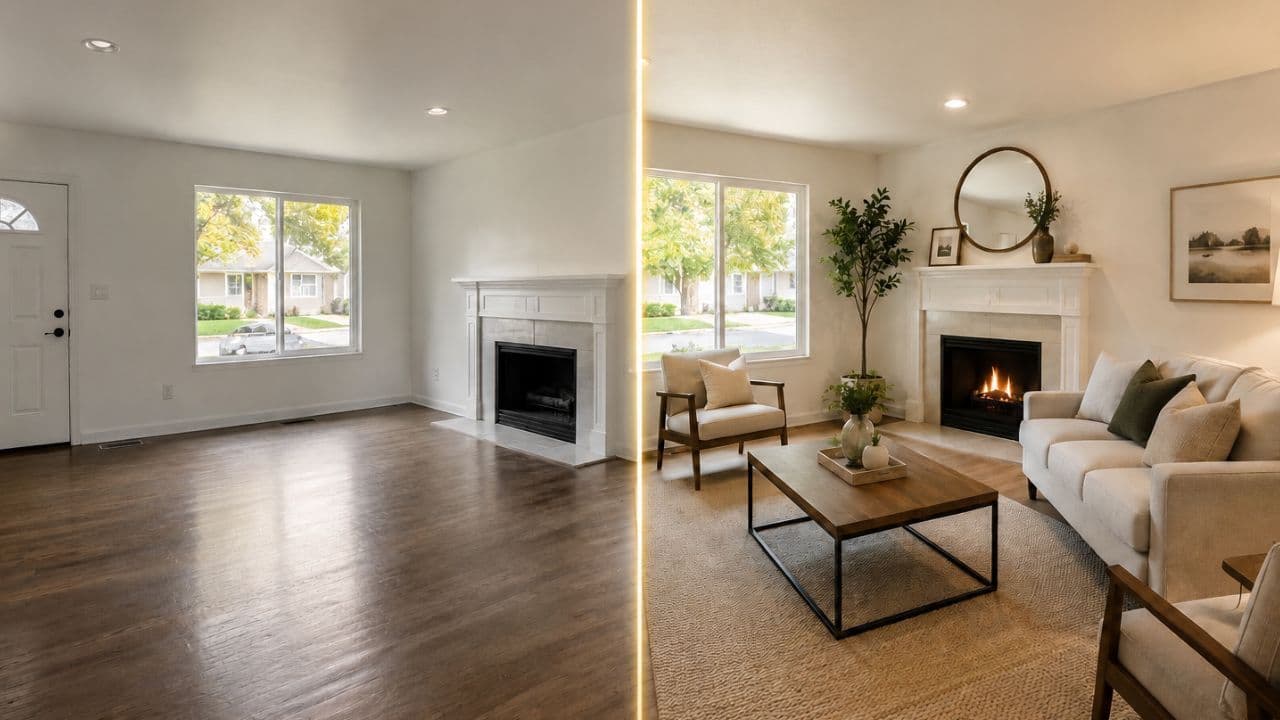
Dark or crooked images, rooms crammed with objects or photos taken in a hurry tend to reduce interest a lot.
Presentation matters more than it seems.
Today, aspects like these make the difference:
Well-crafted photographs.
Good lighting.
Visual order.
A video of the property.
A floor plan.
A virtual tour.
Buyers want to picture themselves living there even before they step through the door.
In addition, Idealista highlights the importance of taking care over presentation, image quality and the visual strategy of the listing in order to increase interest and improve the chances of selling.
3. Thinking that publishing the listing is enough
Another of the biggest mistakes when selling a home is believing that uploading a property to a real estate portal is enough.
Publishing is not the same as selling.
Factors such as these matter:
The order of the images.
The description text.
The quality of the cover image.
The positioning of the price.
The way the home is presented.
Two similar flats can have completely different results depending on how they are set up.
It is not just about appearing.
It is about standing out in the right way.
4. Trying to hide defects in the property
Sometimes people avoid talking about certain uncomfortable aspects:
The need for renovation.
Damp.
Outstanding special community levies (derramas).
Unfavourable orientation.
Noise.
However, this usually ends up working against you.
When buyers discover something relevant during the viewing that they were not expecting, they automatically lose trust.
Being transparent does not harm the sale.
It makes it more solid.
A well-informed buyer usually negotiates better and decides with fewer doubts.
Often, explaining a limitation properly creates more credibility than trying to hide it.
5. Not preparing the home before the viewings
There is no need to turn a home into a show flat.
But it should give a sense of order, spaciousness and care.
Small changes can make a huge difference:
Visual order.
Clear, uncluttered spaces.
Natural light.
A pleasant smell.
Small repairs taken care of.
Sometimes something as simple as rearranging furniture, painting a wall or improving the entrance completely changes the buyer's perception.
The emotional component carries a great deal of weight in a viewing.
You may also be interested in our guide on how to prepare a flat before selling it.
6. Constantly changing strategy
Some owners keep changing the listing:
They change the price every so often.
They keep swapping the photographs.
They change the text every week.
They publish on too many sites without any criteria.
The result is usually a sense of improvisation.
Selling a home requires a clear strategy and a certain amount of patience to analyse the results before reacting.
The market needs time to respond.
And buyers also notice odd behaviour in listings.
7. Waiting too long to react
Sometimes the data speaks for itself:
Few viewings.
Few enquiries.
Little interest.
A long time on the market.
However, some owners take too long to adjust their decisions.
And here an important problem appears: the property starts to “burn out” digitally.
Many buyers have already seen it several times and interpret it as a home that is hard to sell.
That is why it is worth analysing:
Number of views.
Quality of the viewings.
Market comparables.
Reacting late can even affect the final price you obtain.
Conclusion: selling well does not depend on luck
Avoiding these mistakes when selling a home can make the difference between selling quickly and well, or spending months without results.
Often the problem is not the market.
It is how the sale is approached.
The one who lists at the highest price does not always sell first.
Often the one who sells best is the one who understands how buyers think today and makes good decisions from day one.
Because selling a home is not about trying your luck.
It is about doing things right from the start.
Keep reading

Thinking of selling?
We call you, come and see it, and tell you what it's worth and how we'd sell it.