Personal income tax (IRPF) on selling a home in Catalunya: when it is paid and how it is calculated
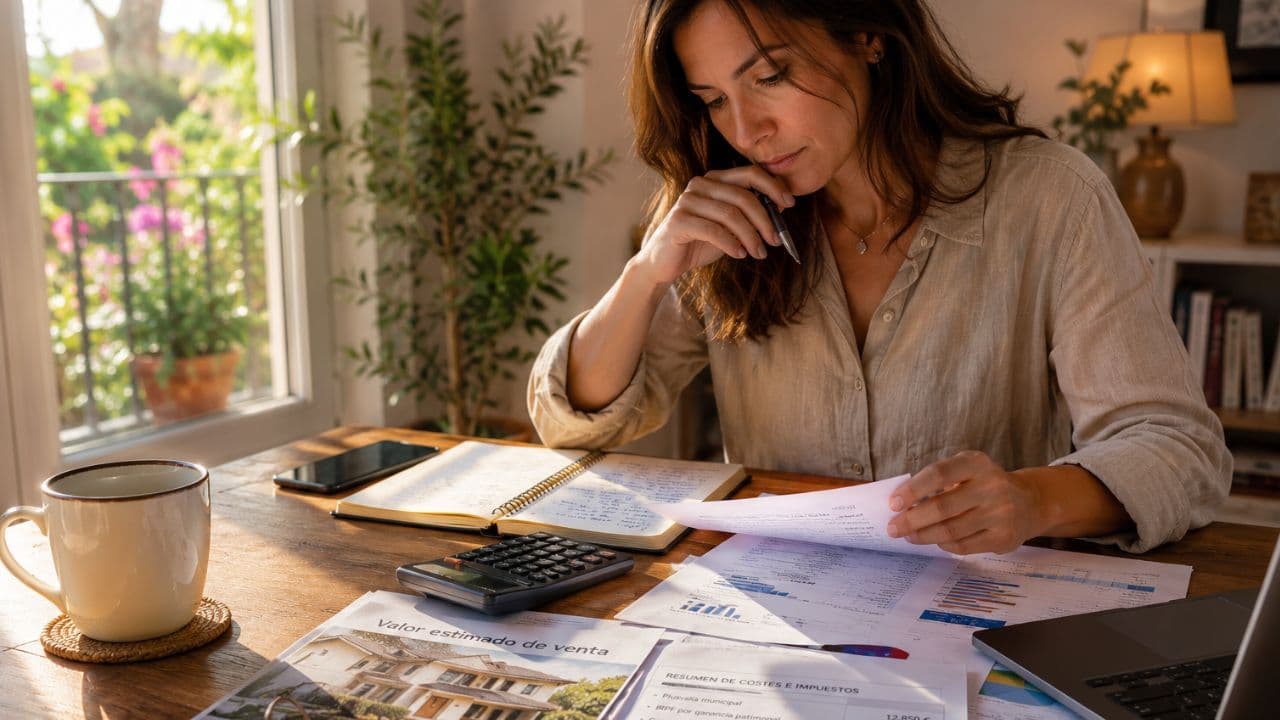
Find out how personal income tax (IRPF) works when you sell a home in Catalunya, when it is paid, how it is calculated and which exemptions apply.
If you're selling in Vilanova i la Geltrú, we'll work out what you'll keep in your own case: ask for a free valuation, or see how we sell in Vilanova.
When selling a home, many owners think only about the sale price or about paying off the mortgage. However, there is a key aspect worth knowing before you sign: IRPF on the sale of a home in Catalunya.
The sale of a property can generate a capital gain that must be declared in the tax return for the year in which the transfer takes place. Depending on each situation, this may mean paying tax or, on the contrary, benefiting from one of the exemptions provided for by the regulations.
Key points
You pay on the gain, not on the sale price. If you sell for more than it cost you, only the difference is taxed: the capital gain.
Expenses count in the calculation. Notary and registration costs, taxes paid and documented improvements are added to the purchase price; expenses borne by the seller are subtracted from the sale price.
It is declared in the tax return for the year of the sale. The gain is taxed within the savings tax base. As rates can change, it is worth checking those in force when you file your return.
Reinvesting in another main residence may exempt you. If you sell yours and use the proceeds to buy another within the legal deadlines, the exemption may be full or partial. With an outstanding mortgage, it needs analysing.
People over 65 may be exempt. If you sell your main residence and meet the legal requirements, the gain may be completely exempt from IRPF.
If you sell at a loss, you normally don't pay. That loss may also have tax effects that are worth reviewing with a specialist adviser.
What is IRPF on the sale of a home?
Personal income tax (IRPF) is charged on the gains obtained by taxpayers.
When a person sells a home for more than it cost to acquire it, the tax authorities consider that there is a capital gain.
That gain must be declared in the tax return and taxed at the rates in force for the savings tax base.
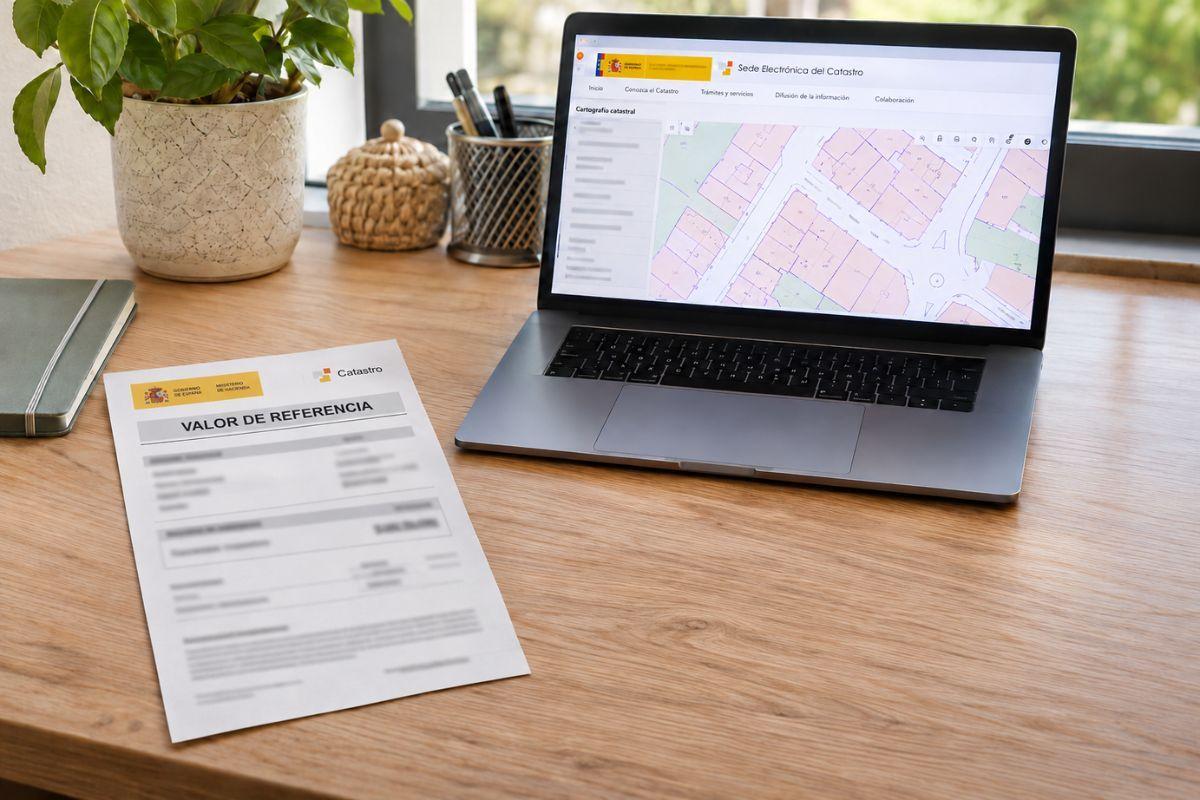
You can consult the official regulations on the Spanish Tax Agency's electronic office
How is the capital gain calculated?
In simple terms, the calculation consists of subtracting the acquisition value from the sale price.
However, both the purchase value and the sale value can be adjusted to take certain expenses into account.
Acquisition value
It generally includes:
Purchase price.
Notary fees for the purchase.
Registration costs.
Certain documented investments or improvements.
Transfer value
It generally includes:
Sale price.
Less expenses borne by the seller.
Estate agency fees.
Mandatory certificates.
Other expenses linked to the sale.
The difference between the two values will determine whether there is a capital gain or loss.
How much IRPF do you pay on the sale?
Capital gains are taxed within the savings tax base.
The percentages may change over time, so it is always advisable to check the rates in force at the time of filing the return.
The important thing is to understand that tax is not paid on the total sale price, but only on the gain obtained.
Exemption for reinvestment in a main residence
One of the best-known exemptions is reinvestment in a main residence.
If the seller transfers their main residence and uses the proceeds to buy another main residence within the legally established deadlines, they may benefit from a full or partial exemption on the capital gain.
Each case requires a specific analysis, especially where there are outstanding mortgages or partial reinvestments.
Exemption for people over 65
One of the most important tax advantages is the exemption that applies to people over 65.
When a taxpayer sells their main residence and meets the legal requirements, the capital gain obtained may be completely exempt from IRPF.
This is a very significant measure for many people who sell their main residence after living in it for decades.
What if the home is inherited?
Inherited homes have their own particularities.
In these cases, the acquisition value is not usually the one the deceased person paid when they bought the home, but the value declared during the inheritance.
For this reason, the calculation of the capital gain can be very different.
If you find yourself in this situation, you may be interested in reading Selling an inherited flat.
What happens if there is a loss?
Not every sale generates a gain.
Sometimes the property is sold for less than its acquisition value, or expenses considerably reduce the profit obtained.
When there is a capital loss, you normally do not pay IRPF on the transaction and, in addition, that loss may have tax effects that are worth analysing with a specialist adviser.
The importance of calculating it before selling
One of the most common mistakes is deciding to sell without first estimating the tax impact of the transaction.
Knowing the possible tax liability in advance allows you to:
Plan the sale better.
Avoid surprises in your tax return.
Assess possible exemptions.
Analyse reinvestments.
Make decisions with greater confidence.
It may also be useful to read our article on What costs are involved in selling a home in Catalunya
The sale is declared in the following year's income tax return. What is left to do straight after the deed is explained in what to do after selling a flat.
Conclusion
IRPF on the sale of a home in Catalunya is one of the most important taxes that owners must take into account when selling a property.
Although the existence of a capital gain usually means paying tax, there are situations that can reduce or even completely eliminate the tax, such as reinvestment in a main residence or the exemption for people over 65.
Before selling, it is advisable to analyse each case individually and calculate the possible tax impact of the transaction, in order to avoid unexpected costs and make proper use of the benefits provided for by the regulations.
Keep reading
Thinking of selling?
We call you, come and see it, and tell you what it's worth and how we'd sell it.