Is Furniture Included When You Sell a Property? What Many Owners and Buyers Don't Know
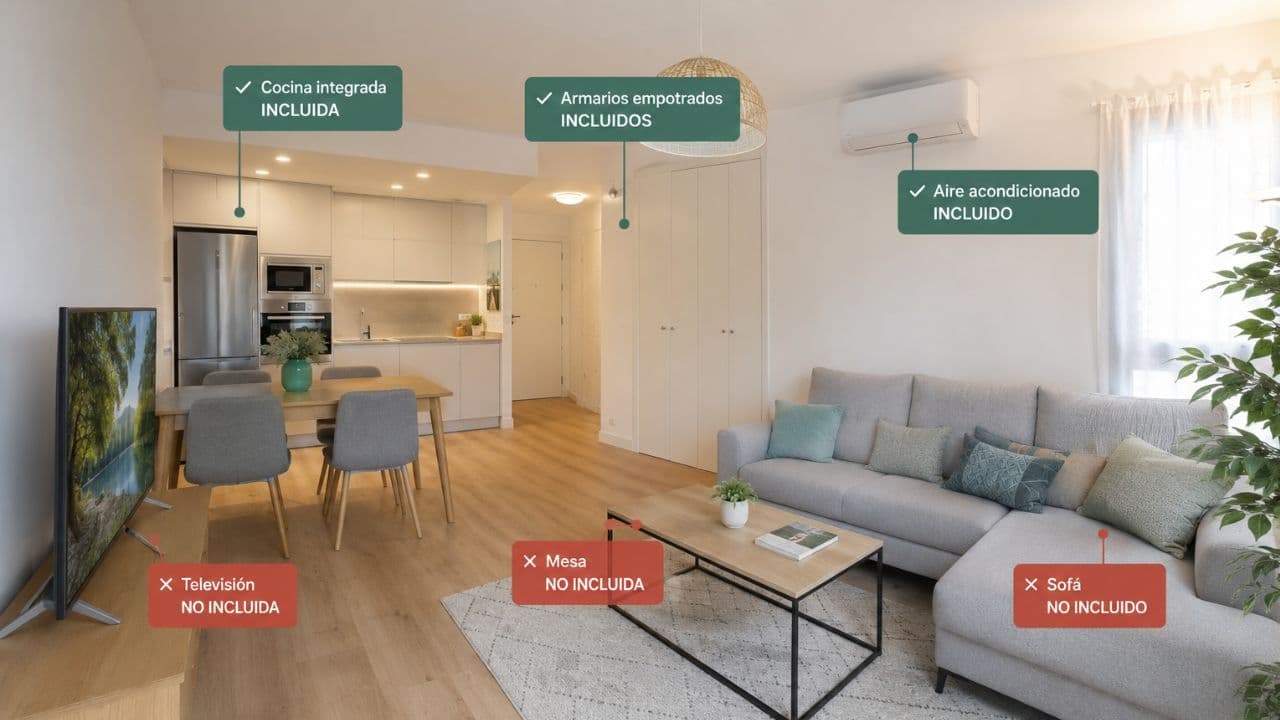
Is furniture included when you sell a property? Find out which items form part of the sale and how to avoid problems between buyer and seller.
Selling in Vilanova i la Geltrú or the Garraf? This is how we do it, area by area. And if you'd like a figure first, ask for a free valuation.
One of the most common questions during a property sale is whether the furniture is included in the sale of the home. The short answer is simple: normally, no.
However, the reality is that this issue causes more disputes than you might think. Many buyers assume that certain items are part of the property because they appear in the photographs or because they were there during the viewings. For their part, some sellers consider it obvious that they will be able to take certain items with them when they leave the property.
That is why it is important to know exactly what is transferred in a property sale and how to avoid misunderstandings.
Key points
You sell the property, not the furniture. Movable goods are not usually included unless buyer and seller expressly agree otherwise.
What is fixed usually stays. Built-in wardrobes, kitchen units fixed to the wall, the boiler, radiators, installed air-conditioning or blinds are normally considered part of the home.
Appearing in the photos does not mean it is included. Sofas, beds, televisions, lamps or household appliances not expressly agreed are not part of the sale, even if they were there during the viewings.
Whatever stays, put it in writing. The best option is a detailed inventory, ideally with photographs, so there is no doubt on the day the keys are handed over.
The inventory goes with the deposit contract (contrato de arras). It can be attached as an annex and, if the parties see fit, also be reflected in the deed of sale (escritura de compraventa).
Better to talk about it from the start. Most disputes come from misunderstandings that can be avoided by agreeing, from the early stages of the negotiation, what stays and what does not.
What is really sold in a property sale
When we talk about a property sale, what is transferred is the property itself.
That is to say, the home, its structural elements and the fixed elements that form part of it.
Movable goods, on the other hand, are not usually included unless buyer and seller expressly agree otherwise.
This point is especially important because many people associate the home with everything they see in it during the viewings, when legally that is not always the case.
What is usually considered part of the property
Although every transaction can have its own particularities, the fixed elements built into the home are normally considered to be included.
For example:
Built-in wardrobes.
Kitchen units fixed to the wall.
Worktops.
Integrated extractor hoods.
Bathroom screens.
Boiler.
Radiators.
Installed air-conditioning units.
Blinds.
Fixed awnings.
Made-to-measure items built into the home.
These elements usually stay with the property because they form part of its normal layout.
What is normally not included
On the other hand, there are many items that do not usually form part of the sale.
Among them:
Sofas.
Tables.
Chairs.
Beds.
Mattresses.
Televisions.
Paintings.
Decorative objects.
Floor lamps.
Side furniture.
Household appliances not expressly agreed.
Even if these items appear in the photographs or during the viewings, that does not automatically mean they are part of the transaction.
The most common mistakes
In many property sales, problems arise from simple misunderstandings.
Some common examples are:
The buyer thought the fridge was included.
The seller takes a lamp that the buyer believed was part of the home.
The buyer expects to find certain furniture there after signing.
The seller removes garden furniture that had never been agreed to be left behind.
Most of these situations could be avoided with clear communication from the start.
If furniture is left behind, it is best to document it
When buyer and seller agree that certain furniture or household appliances will stay in the home, the most advisable thing is to put it in writing.
Best practice is to draw up a detailed inventory of the items that will be handed over with the property.
It is also highly advisable to attach photographs to that inventory so that each item can be clearly identified.
This avoids any doubt about what should remain in the home on the day the keys are handed over.
Where should the inventory be included?
Ideally, this inventory should form part of the transaction documentation.
It can usually be attached as an annex to the deposit contract (contrato de arras) and, if the parties see fit, also be reflected in the deed of sale (escritura de compraventa).
The more clearly the agreement is set out in writing, the lower the risk of later disputes.
This kind of provision is especially useful when the following are included:
Household appliances.
High-value furniture.
Garden equipment.
Terrace furniture.
Specific decorative items.
The importance of making everything clear from the start
A property sale involves many details, and problems often appear precisely over matters that seem minor.
For this reason, it is advisable for buyer and seller to clarify from the early stages of the negotiation which items will stay in the home and which will not.
Good documentation helps avoid unnecessary arguments and gives both parties certainty.
If you would like to know more about the documentation involved in a property sale, you can read our article on Deposit contract (contrato de arras): what types there are and which one to choose in a property sale, and also our guide on Why a property viewing sheet is signed.
For further legal information on real estate and movable goods, you can also consult the Official State Gazette (Boletín Oficial del Estado) and the information provided by the General Council of Notaries (Consejo General del Notariado).
Conclusion
The general rule is simple: in a property sale, you sell the property, not the furniture it contains.
If buyer and seller wish to include certain items, the most advisable thing is to identify them in a detailed inventory, ideally with photographs.
Proper documentation avoids misunderstandings and means the keys can be handed over without any arguments.
Keep reading

Thinking of selling?
We call you, come and see it, and tell you what it's worth and how we'd sell it.