Building technical inspection (ITE) when selling a flat in Catalunya
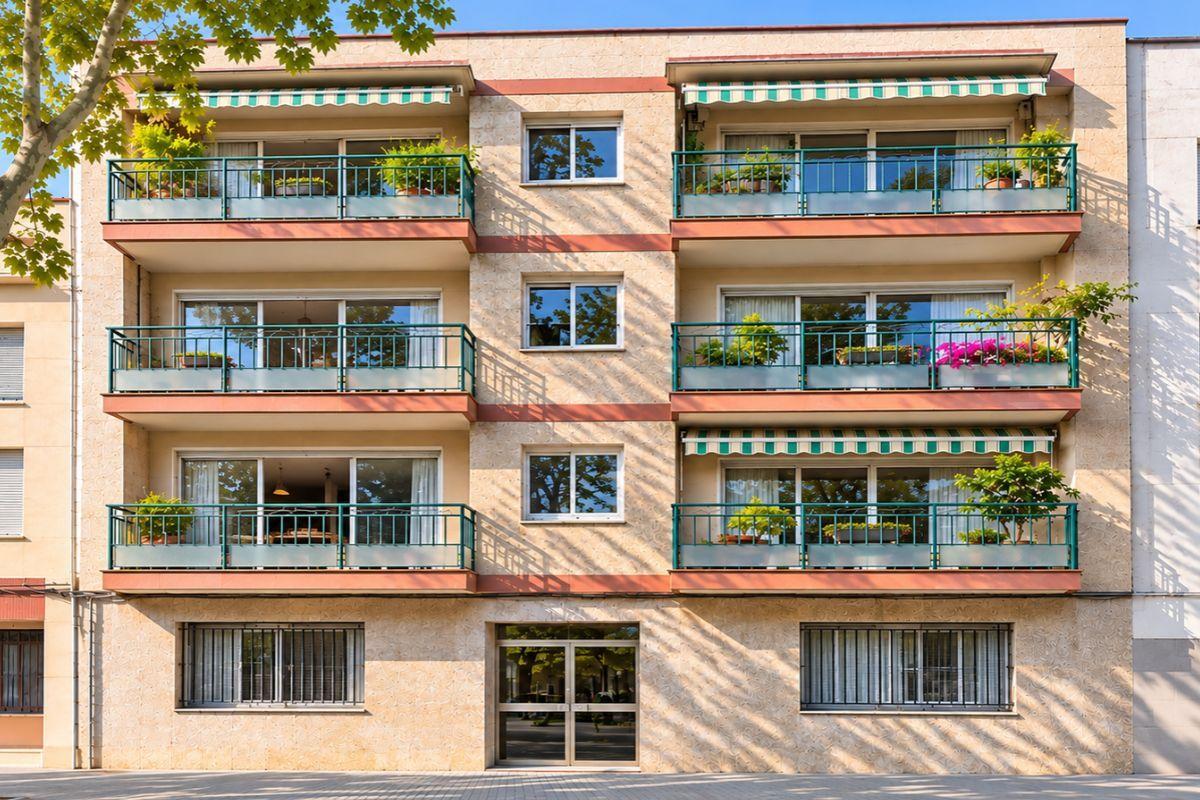
Building technical inspection when selling a flat in Catalunya: what to give the buyer, how long the certificate lasts and who pays special levies.
Selling in Vilanova i la Geltrú or the Garraf? This is how we do it, area by area. And if you'd like a figure first, ask for a free valuation.
If you are selling a flat in a building that is 45 years old or more, the buyer will ask you about the building technical inspection (ITE). In Catalunya, when the building is required to pass it, the seller must give the buyer a copy of the inspection report and of the certificate of fitness issued by the Agència de l'Habitatge de Catalunya (Llei 18/2007 del dret a l'habitatge, art. 65).
It is not something you arrange on your own: the ITE is commissioned by the homeowners' association (comunidad de propietarios). But it is worth knowing whether your building has one, what result it got and whether any works or special levies are pending, because all of that comes up in the negotiation. We mentioned it in our article on the documents you need to sell a home in Catalunya; here we explain it in depth.
The essentials
Buildings 45 years old or more. Every residential building must pass the inspection before it turns 45, counted from the date in the Cadastre (Catastro).
When you sell, you hand it over. If the building is required to have it, the seller gives the buyer a copy of the report and of the certificate of fitness.
The buyer can release you from it. They do so expressly and for justified reasons before the notary, who records it in the title deed (escritura).
The certificate expires. It lasts 10, 6 or 3 years depending on the defects the inspector found.
A poor result does not stop you selling. But you must tell the buyer and make clear who takes on the works and the special levies already approved.
Debts with the association, certified. The certificate of debts includes approved special levies that are not yet due.
What is the building technical inspection in Catalunya?
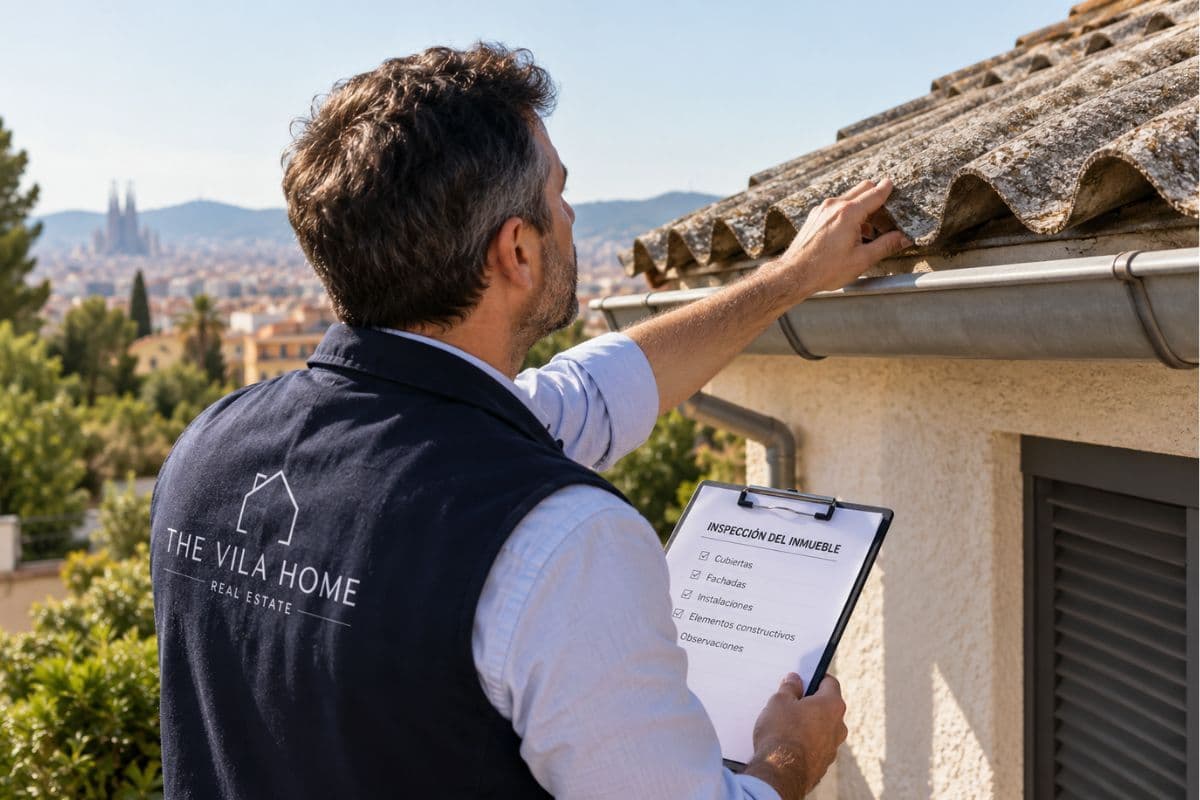
It is a check of the building's state of repair carried out by a qualified professional: structure, façades, roofs and shared services. Catalan housing law provides for it to show that buildings still meet the required quality standards, and leaves its content and validity to regulations (Llei 18/2007, art. 28). Those regulations are Decret 67/2015.
The process has two parts that should not be confused:
The technical inspection report (IITE). It is signed by the professional (an architect, technical architect or building engineer), who must be registered with their professional body and hold civil liability insurance. It is valid for 4 months: within that time it has to be submitted to the authorities.
The certificate of fitness (certificat d'aptitud). It is issued by the Agència de l'Habitatge de Catalunya (or by the town council, if it has taken on that role) on the basis of the report. It is the document that proves the building has complied.
The details are on the Generalitat's official page for the certificate of fitness; the deadlines and validity periods in this article come from it.
Does my building have to pass it?
The general rule is simple: every residential building must pass the inspection before it turns 45, and its age is taken from the date shown in the Cadastre. It applies to blocks of flats and to many houses too.
Blocks of flats (multi-family buildings). Those built up to 1971 should already have passed it (the deadlines ended in 2015 and 2016). From 1972 onwards, the deadline is 31 December of the year in which the building turns 45. For example, a building from 1981 has until 31 December 2026, and one from 1982 until 31 December 2027.
Houses (single-family homes). They are exempt if the main building stands 1.5 metres or more from the public road, from areas of public use and from neighbouring plots. And if the house has a valid certificate of occupancy (cédula de habitabilidad) when it turns 45, it does not have to submit the report until that certificate expires.
Other cases. It is also compulsory if a Generalitat programme or a municipal by-law requires it, or if the association applies for public renovation grants (Llei 18/2007, art. 28.2).
In Vilanova i la Geltrú, as in the rest of the Garraf, it is worth checking the building's construction date in the Cadastre: if it is 45 years old or more, buyers will ask about the ITE from the first viewing.
What do I have to give the buyer?
With a resale home, the seller must give the buyer the certificate of occupancy, the technical inspection label (if the building was required to pass it), the mortgage documents, if there is a mortgage, and the deed of horizontal division and the association's bylaws (Llei 18/2007, art. 65.2).
The same law requires whoever manages the association to give you a copy of the technical inspection report, together with the certificate of debts, so that you can pass it on to the buyer (art. 65.2). According to the Generalitat's page, what you hand over is a copy of the report and of the certificate of fitness. If the certificate could not be obtained because the report found serious or very serious defects, you hand over a copy of the report with the date it was submitted to the authorities.
And if the buyer does not want it? They can expressly release you from handing it over, for justified reasons, before the notary. The notary explains this obligation and, if there is a waiver, records it in the deed. The sensible thing is for the buyer to know from the start and for it to be reflected in the deposit contract (contrato de arras).
How long does the certificate of fitness last?
It depends on what the inspector found. Defects are classed as minor, significant, serious and very serious, and the certificate's validity changes with the result:
| Result | Validity | Condition |
|---|---|---|
| Fit, with no defects or only minor ones | 10 years | — |
| Provisionally fit, with significant defects | 6 years | Technical check every 2 years |
| Fit as a precaution, with serious or very serious defects | 3 years | Check when the inspector indicates and at least every 12 months |
Before it expires, the association has to carry out a new inspection and apply for a new certificate. If you sell with an expired certificate, the building is in the same position as if it had none: it has not shown that it complies.
A useful point: the certificate of fitness is about the building's state of repair. It does not prove that everything is legal or that the home meets habitability standards. That is what the certificate of occupancy is for and, in homes built before 2002, the asbestos certificate.
Can I sell if the building has no ITE or has defects?
Yes. Neither a missing ITE nor an unfavourable result stops you selling your flat. But they change the sale in three ways:
Information. The buyer has the right to know the state of the building. Hiding it can break the deal or end in a claim.
A penalty for the association. Not having the technical inspection report when it is required is a serious offence (Llei 18/2007, art. 124.g), with fines of 9,001 to 90,000 euros (art. 118). It affects the building's owners, not the sale itself.
Works ahead. If the report finds defects, the owners must approve a renovation programme within a year, or within six months if they are serious or very serious, and carry out the precautionary measures straight away. The buyer will want to know how much they will cost and who pays for them.
A building with pending works does not put every buyer off, but it does change the conversation about price. That is why, when we prepare a valuation, we ask about the state of the building before talking figures.
Who pays approved special levies if I sell?
This is where the certificate of debts with the association comes in. In Catalunya, when you sell you must declare whether you are up to date with payments and provide a certificate signed by whoever acts as the association's secretary. That certificate also includes extraordinary expenses and contributions to the reserve fund that have been approved but are not yet due. Without that declaration and certificate the deed cannot be signed, unless both parties expressly waive them (Codi civil de Catalunya, art. 553-5.2).
Two points so that nothing catches you out:
The flat is answerable for the debts. The home remains liable for shared expenses, ordinary and extraordinary, and for the reserve fund for the part of the current year already due and the four previous years, even if it changes hands. And you, as the seller, remain liable for what you owed on the day of the sale (art. 553-5.1 and 2).
Anything approved but not yet due is best agreed. If the owners' meeting has approved a special levy to repair the façade after the ITE and the payments fall due after the signing, decide with the buyer who takes it on and put it in writing in the deposit contract. It can be deducted from the price or paid before the deed: what matters is that you both know from the start.
Are there grants for the ITE in the Garraf?
The cost of the inspection is borne by the owners. Some town councils offer one-off grants. In Sitges, for example, the Ajuntament opened in 2024 a call for grants for the ITE together with energy certificates, with a budget of 50,000 euros, for buildings more than 45 years old according to the Cadastre. Calls change every year: if your association still has it pending, ask at your town's local housing office.
Before signing the deposit contract, ask your building's managing agent for a copy of the report, the certificate of fitness and the certificate of debts. If you are thinking of selling in Vilanova or the Garraf and are not sure what state your building is in, at The Vila Home we go through it with you before putting the home on the market.
Keep reading

Thinking of selling?
We call you, come and see it, and tell you what it's worth and how we'd sell it.