Selling a house with unlicensed works or square metres that don't add up
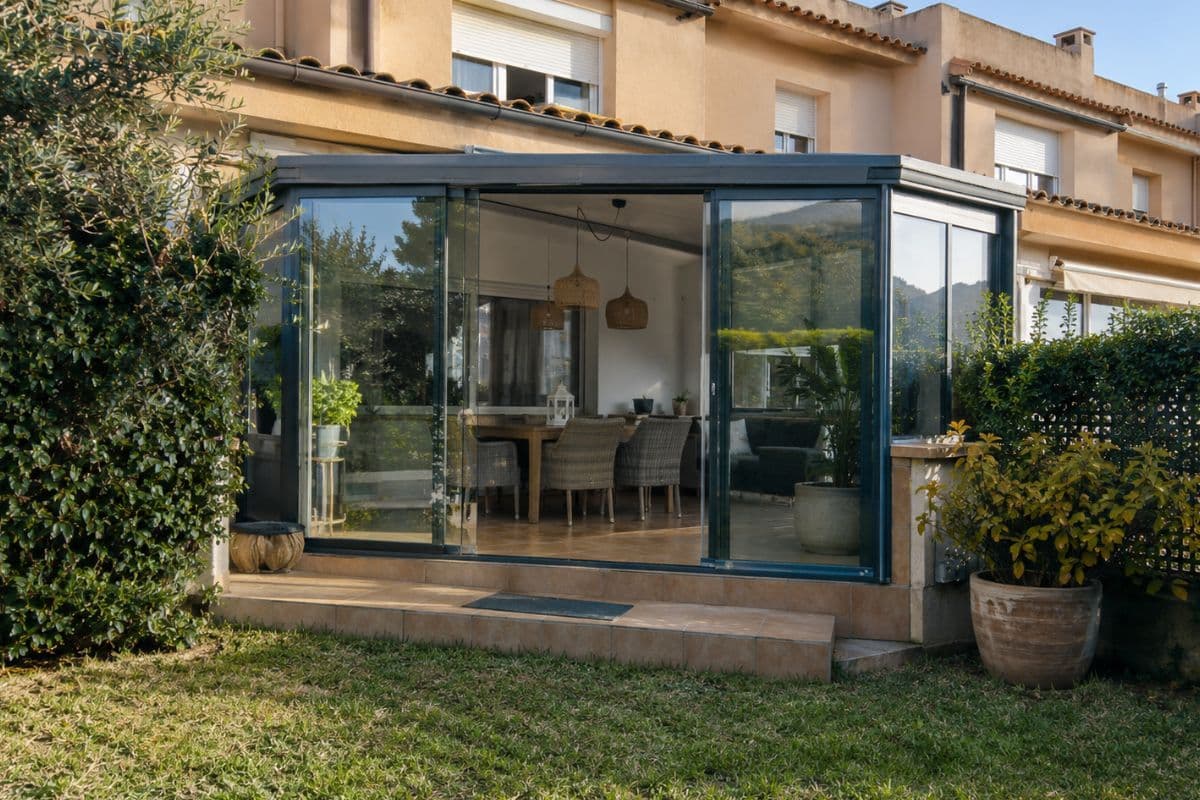
Selling a home with unlicensed works: what it means for the Land Registry, the Cadastre and the buyer's mortgage, and how to regularise old works.
Selling in Vilanova i la Geltrú or the Garraf? This is how we do it, area by area. And if you'd like a figure first, ask for a free valuation.
Key points
You can sell, but it will show. An undeclared extension or enclosure doesn't prevent the sale, but it affects the price, the buyer's mortgage and the timescales.
Your home has three descriptions. The one in the Land Registry (Registro de la Propiedad), the one in the Cadastre (Catastro) and the reality. Ideally, all three should match before you sign the deposit contract (contrato de arras).
In Catalunya, six years. Six years after the works were completed, the town council can no longer order demolition, except on specially protected land (Llei d'urbanisme, art. 207).
Old works can be registered. With a technical certificate, a notarial deed or the cadastral certificate, the works can be declared on the basis of their age (TRLSRU, art. 28.4).
The buyer's bank will check. If the actual floor area doesn't match the registered or cadastral one, the mortgage appraisal may be conditional.
What kind of works are we talking about?
In the Garraf it is very common to find houses and flats with changes that were never declared: a terrace enclosed with aluminium, a porch turned into a living room, an attic converted into a bedroom, a ground-floor extension or a swimming pool built years after buying the house. Many of these works were done decades ago, sometimes by the previous owner.
The problem doesn't usually show up while you live in the property. It shows up when you want to sell: the buyer, their bank and the notary compare what is there with what the papers say, and any difference becomes a question that has to be answered.
It is worth distinguishing two situations that often go together:
Works without a licence or prior notification: this is a planning matter, which depends on the town council.
Square metres that don't match: the floor area in the Land Registry, in the Cadastre and in reality are different. This may be due to undeclared works or simply to old measurement errors.
Land Registry, Cadastre and reality: why they don't match
The Land Registry (Registro de la Propiedad) records the description that appears in the registered deeds. You can check it with a land registry extract (nota simple), which shows the floor area and the description of the property. The Cadastre (Catastro) is an administrative register with tax purposes: its data is used to calculate the property tax (IBI) and appears in the cadastral certificate.
They are different institutions and for many years they didn't talk to each other. That is why it is common for the same house to have one floor area in the Land Registry, another in the Cadastre and a third in reality, especially if it has been extended over the years.
The law requires the owner to declare to the Cadastre new constructions and any extensions, refurbishments or renovations (Ley del Catastro Inmobiliario, arts. 13 and 16). The deadline is two months from the day after the works are completed (RD 417/2006, art. 28.2) and it is done using form 900D. Failing to declare, or doing so late, is an offence punishable by a fine of 60 to 6.000 euros (arts. 70 and 71), although when the Cadastre regularises the situation of its own accord no penalties are imposed and a fee of 60 euros per property is charged (third additional provision).
Do unlicensed works become time-barred in Catalunya?
What becomes time-barred is the town council's power to force you to restore the previous situation, that is, to demolish or undo the works. According to the Llei d'urbanisme de Catalunya:
The action to restore legality is time-barred after six years from the completion of the works (art. 207).
Offences are time-barred after six, four or two years depending on whether they are very serious, serious or minor (art. 227).
They are never time-barred for works on land set aside for public open spaces, for the road network or on non-developable land with special protection (art. 207.3).
The fact that works have become "time-barred" doesn't mean they are legal. You can no longer be forced to demolish them, but they still don't comply with the planning rules, and that planning situation, with its limitations, may end up being noted in the Land Registry, as you will see below. That is why the date the works were completed is key, and you need to be able to prove it.
How to regularise old works
There are two routes, depending on the planning status of the works.
If the works can be legalised
If what has been built complies with the current planning rules, you can apply for a legalisation licence. In our town, the town council has a specific procedure for legalising constructions in Vilanova i la Geltrú, which requires, among other things, a project signed off by an architect's professional association, a structural soundness certificate and documentation for the property. It involves the construction tax (ICIO) and the corresponding municipal fee, according to the tax bylaws.
If the works can't be legalised but are time-barred
In that case, a declaration of new build by age is made before a notary. The law allows it to be registered in the Land Registry if it is shown that the works were completed on a specific date with one of these documents (Ley del Suelo y Rehabilitación Urbana, art. 28.4):
A certificate from the town council or from a qualified technician.
A descriptive notarial deed.
The descriptive and graphic cadastral certificate, if it already includes the works.
The registrar checks that there is no planning enforcement file noted against the property and, after registering it, notifies the town council. If the registration was made without a municipal certificate, the town council must issue a resolution so that the specific planning status of the works is noted in the margin.
When the land area also needs to be corrected, the Ley Hipotecaria allows differences in area of up to 10 % to be recorded using the cadastral certificate, or 5 % in other cases, without the need for a formal procedure (art. 201.3). For larger differences there is a notarial procedure. That procedure cannot be used to correct the square metres of a building: that is done through the declaration of works.
How it affects the buyer's mortgage
This is the point that complicates most sales. Most buyers need financing, and the bank commissions a mortgage appraisal from an approved appraisal company. That appraisal follows Orden ECO/805/2003, which establishes that:
The appraiser uses the floor area they have checked. If they cannot check it, they take the smaller one of the cadastral and registered areas (art. 5.1).
If the verified floor area exceeds the registered or cadastral one by more than 5 % (10 % for flats within a building), it can only be taken into account if the appraiser verifies that it complies with planning regulations (art. 5.1.c).
If documentation is missing or there are well-founded doubts about the characteristics of the property, the value is conditional (art. 10), and a conditional value cannot be used to grant a mortgage (art. 9).
Minor differences or lack of compliance with the planning rules appear as warnings in the report (art. 11).
In practice, an undeclared 30-square-metre extension may not count towards the appraisal value. If the buyer needs to finance a high percentage, they will have to cover the difference out of their own pocket, and that can sink a deal that seemed settled. That is why it is much better to know beforehand, before setting the price and before signing the deposit contract.
What about the certificate of occupancy (cédula de habitabilidad)?
In Catalunya, to sell a second-hand home you must hand over a valid certificate of occupancy, and the notary requires it in the deed (Llei 18/2007 del dret a l'habitatge, arts. 26 and 132). It is worth knowing that the certificate only attests to technical habitability conditions: it does not legalise the works. If, while processing it, it is found that the use as a home may not comply with planning law, this is recorded in the certificate itself and the notary must warn the buyer (art. 26.5 bis).
What should you do before putting the house on the market?
The most useful thing is to spot the differences before publishing the listing, not when a buyer is already waiting for their bank's answer. Comparing the land registry extract, the cadastral certificate and the actual home lets you know from the start whether there is something to explain.
The date of the works is what matters most: it determines whether the works are more than six years old and whether they can be declared on the basis of their age. A technician can tell you whether the works can be legalised, which document serves to prove their age and how much time and cost each route involves.
With that information you can decide whether it is better to regularise before selling or to sell while explaining the situation clearly, with a consistent price and giving the buyer time to discuss it with their bank. What is never advisable is to keep quiet about it: it will come up in the appraisal or at the notary's, and by then the buyer's trust will already be at stake. Also review the rest of the documents needed to sell a home in Catalunya, because these differences often come to light while gathering them.
If your house has an extension or some square metres that don't add up and you don't know how this affects its price, tell us which property it is and we will review it with you before it goes on the market.
Keep reading

Thinking of selling?
We call you, come and see it, and tell you what it's worth and how we'd sell it.