Energy certificate for selling: what it is, how much it costs and how long it lasts
What the energy certificate is, when it is mandatory, why a G rating is only valid for 5 years and what rating homes sold in Vilanova get.
Selling in Vilanova i la Geltrú or the Garraf? This is how we do it, area by area. And if you'd like a figure first, ask for a free valuation.
To sell a home in Catalunya you need the energy certificate (certificado energético) before you advertise it: the rating has to appear in the listing. Here is what is worth knowing, with figures for the homes certified for sale in Vilanova i la Geltrú over the last year.
Key points
It is mandatory for selling and for letting. The rating has to appear in the listing, including on property portals, and the certificate is handed to the buyer.
It lasts 10 years, but only 5 with a G. That is what Royal Decree 390/2021 (Real Decreto 390/2021) says for certificates registered from 3 June 2021.
In Vilanova, 9 out of 10 homes certified for sale get an E, F or G. An E is normal for a second-hand flat.
A technician produces it and registers it with ICAEN. Anyone can check in ICAEN's search tool whether a home already has one.
We can arrange it for you, with an architect we work with.
What it is
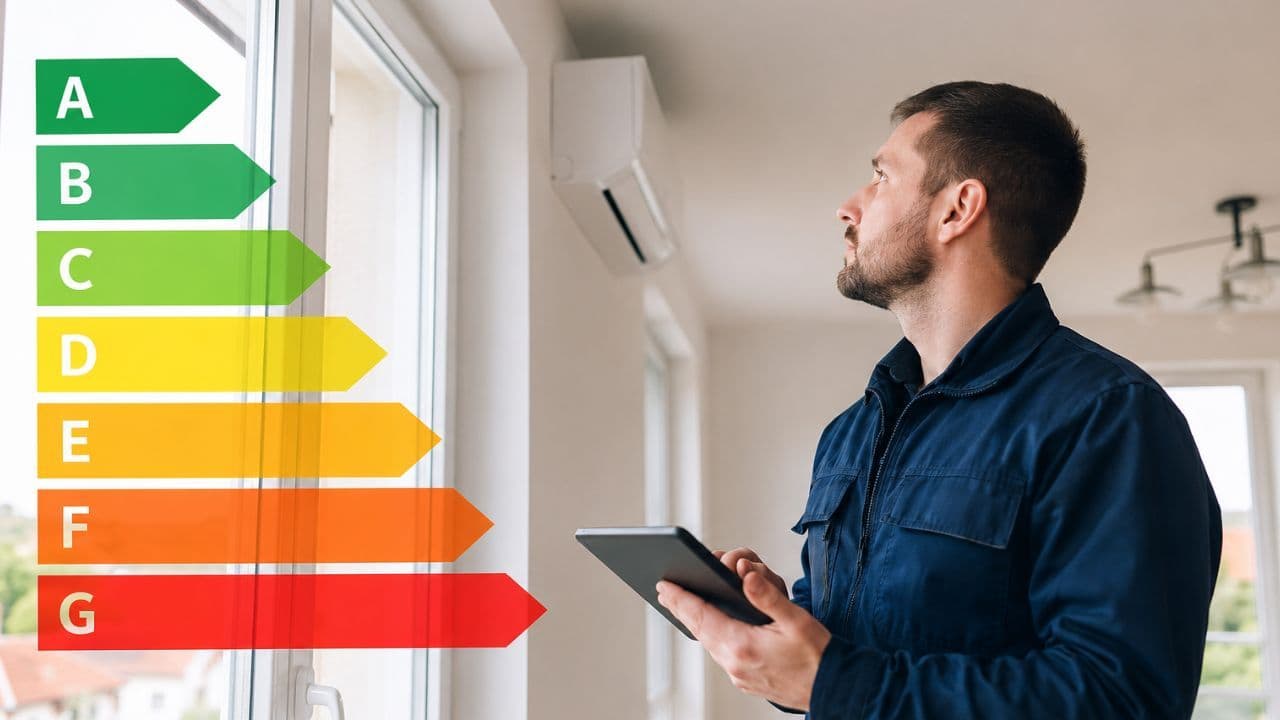
It is an official document signed by a technician after visiting the home. It calculates how much energy the home uses and how much CO₂ it emits in normal use, and gives it two letters, from A (the most efficient) to G (the least): one for energy consumption and another for emissions. It is the coloured label you see in listings.
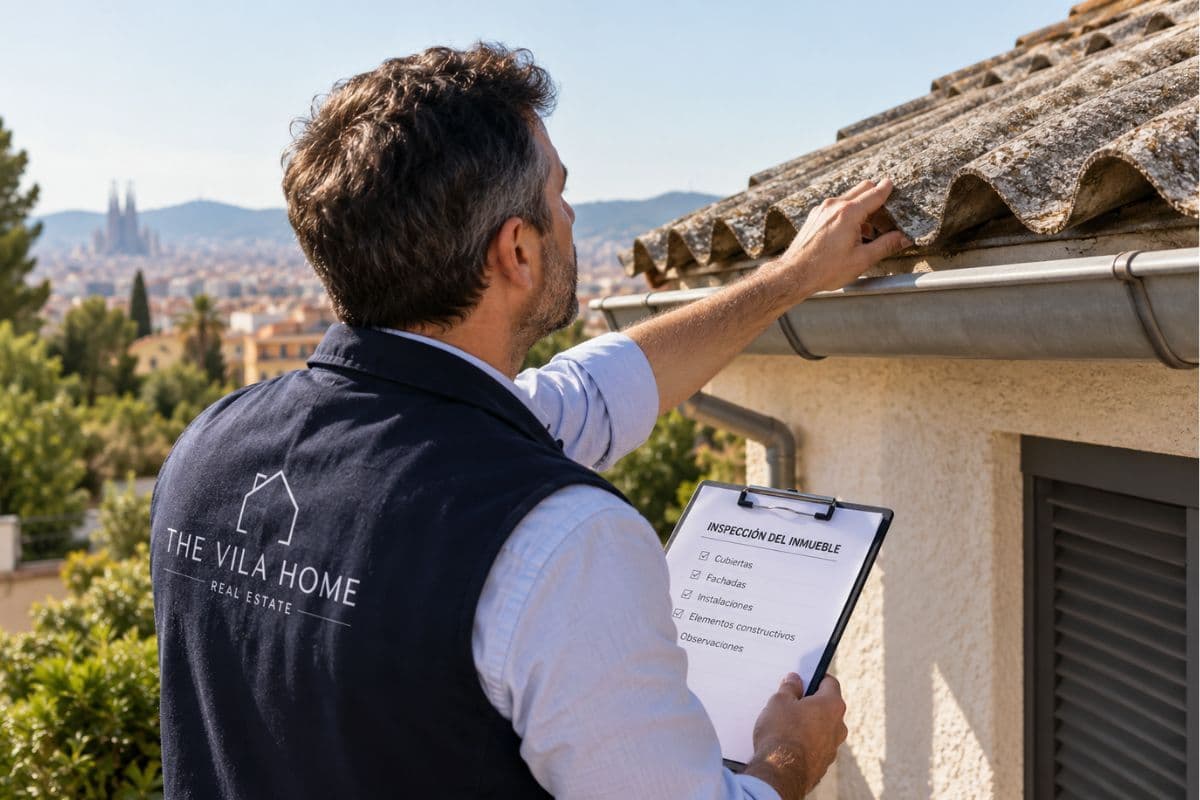
To calculate it, the technician measures the home and checks its orientation, the walls and roof, the windows, the heating, the air conditioning and the hot water.
When it is mandatory
To sell: from the moment you put the home on the market. The rating has to appear in the advertising, including on idealista or Fotocasa, and the certificate is handed to the buyer.
To let: the owner gives the tenant a copy before signing the contract.
Advertising or selling without one can lead to an administrative fine, and it also slows the sale down, because the buyer will ask for it. The practical thing is to have it before taking the photos and publishing.
How long it lasts: 10 years, or 5 with a G
The general rule is that it is valid for 10 years. But under Royal Decree 390/2021, if the home gets a G, the certificate is only valid for 5 years. This applies to certificates registered from 3 June 2021.
If you have an old one, check the date and the letter before putting the home on the market: if it has expired, a new one is needed. And if you have renovated (windows, insulation, boiler or aerothermal heat pump), you may get a better letter than before.
What rating homes in Vilanova get
ICAEN publishes the certificates registered in Catalunya as open data. We have looked at those for homes (flats and houses) in Vilanova i la Geltrú certified for sale between November 2025 and October 2026: 529 certificates.
| Consumption rating | Homes | Percentage |
|---|---|---|
| A | 1 | 0,2 % |
| B | 5 | 0,9 % |
| C | 10 | 1,9 % |
| D | 34 | 6,4 % |
| E | 311 | 58,8 % |
| F | 69 | 13,0 % |
| G | 99 | 18,7 % |
| Total | 529 | 100 % |
Nine out of ten get an E, F or G, the same as across Catalunya as a whole (90,4 % of 66.534 certificates over the same period). So an E for a second-hand flat is normal: it is the letter of more than half of the homes that are sold.
What matters most is the age of the building:
Built before 1980 (245 certificates): 21 % get a G and 60 % an E.
From 1980 to 2006 (185): 14 % get a G.
From 2007 (48), when the Building Technical Code (Código Técnico de la Edificación) already applied: only 2 % get a G, and 28 % get between B and D.
Almost one in five homes sold in Vilanova gets a G. If that is your case, remember that the certificate is valid for 5 years, not 10.
Source: Institut Català d'Energia (ICAEN), «Certificats d'eficiència energètica d'edificis», open data from the Generalitat de Catalunya. Homes certified for a sale, registered from 1 November 2025 to 31 October 2026; rating for non-renewable primary energy consumption.
Who produces it and where it is registered
A qualified technician produces it: an architect, a building engineer (arquitecto técnico), an engineer or a technical engineer. They visit the home, run the calculation with recognised software and enter it in the Generalitat's register, which is managed by the Institut Català d'Energia (ICAEN). Registration gives you the official label, the one that goes in the listing.
How to find out if your home already has one
If you are not sure whether one was ever done (for example, in an inheritance or because you let the home years ago), you can check in ICAEN's certificate search tool: you search by address or by cadastral reference (referencia catastral), and it shows the details of the registered certificate.
How much it costs
There is no official fee: each technician sets their own price depending on the size, the type of home and how complex it is. Ask for the quote to include the visit and the registration.
We arrange it with an architect we work with, for between 100 and 180 €.
Other documents for selling
The certificate is one of several. In Catalunya you will also need a valid certificate of occupancy (cédula de habitabilidad), the land registry extract (nota simple), the latest IBI (property tax) receipt and the certificate of debts with the homeowners' association. You will find them all, one by one, in the documents needed to sell a home in Catalunya.
Selling in Vilanova or the Garraf? We will tell you whether your certificate is still valid and, if you need a new one, we will arrange it. Message us on WhatsApp.
Keep reading
Thinking of selling?
We call you, come and see it, and tell you what it's worth and how we'd sell it.